
Google introduced Nano Banana 2.1 on October 6, 2026, as the high-efficiency successor to Nano Banana 2. That launch immediately prompted a practical question for digital artists and creative studios: do you still need to pay for Nano Banana Pro (built on Gemini 3 Pro Image), or has the lighter 2.1 model closed the gap for daily production?
Here is a direct evaluation of Nano Banana 2.1 vs Nano Banana Pro, looking at technical architecture, real creator feedback from Twitter/X and Reddit, and side-by-side illustrated cartoon benchmarks generated on our production Kie.ai pipeline.
Quick Verdict: Which Model Wins Where?
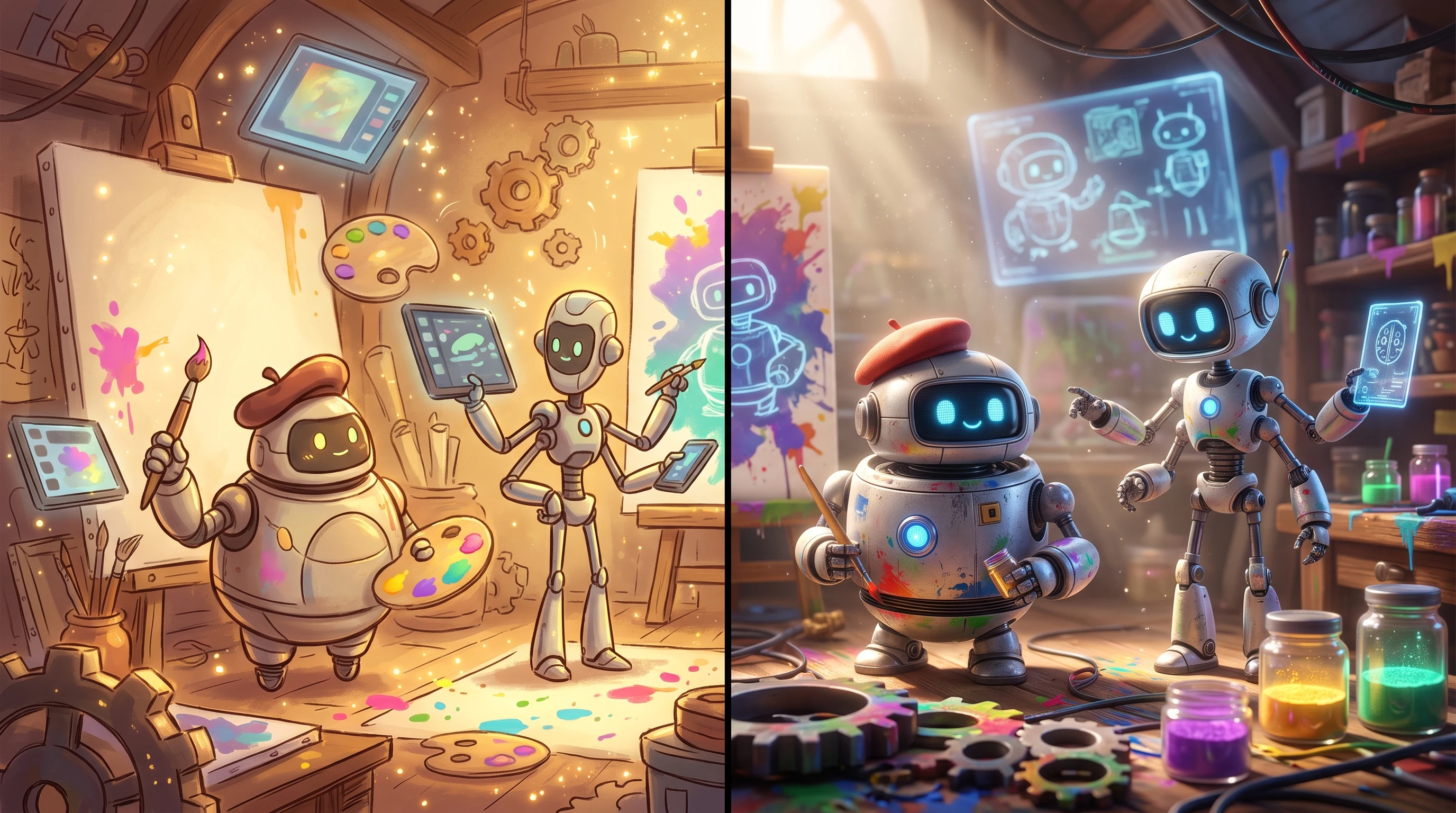
- Choose Nano Banana 2.1 for high-volume workflows, concept drafting, lively character expressions, and everyday cartoon or anime illustrations. Running on the Gemini 3.6 Flash engine, it cuts credit costs by roughly 75%, responds in half the time, and produces warm, natural volumetric lighting without artificial plastic gloss.
- Choose Nano Banana Pro when exact typographic spelling, multi-character identity locking, and strict brand guidelines are critical. Running on Gemini 3 Pro, it commands a premium cost but delivers structural discipline on complex compositions.
Architectural Background and Official Positioning
Both models belong to Google's multimodal generative imaging suite, but they serve distinct stages of creative production.
Nano Banana 2.1: The Flash-Powered Daily Workhorse
Released on October 6, 2026, Nano Banana 2.1 represents Google's current efficiency tier. Built on the Gemini 3.6 Flash multimodal engine:
- Primary Mission: High throughput, rapid creative iteration, and conversational image editing.
- Cost and Speed: Billed at roughly one-fourth the token cost of the Pro tier, making large batches practical.
- Multimodal Capabilities: Supports up to 14 reference images for multi-image fusion, native conversational in-painting, and flexible resolution outputs from 1K to 4K.
- Official Status: Designated by Google as the official successor to Nano Banana 2, which retires in late October 2026.
Nano Banana Pro: The Studio-Grade Flagship
Announced alongside Gemini 3 Pro Image, Nano Banana Pro represents Google's heavyweight visual reasoning model:
- Primary Mission: Enterprise-grade key art, advertising creative, publication covers, and complex asset production.
- Cost and Speed: Premium pricing reflecting heavy parameter utilization and comprehensive semantic grounding.
- Core Strengths: Strict character likeness preservation across disparate poses, complex layout parsing, and fine typographic lettering.
Specifications and Feature Comparison Matrix
| Feature / Metric | Nano Banana 2.1 | Nano Banana Pro | Advantage / Takeaway |
|---|---|---|---|
| Foundation Engine | Gemini 3.6 Flash | Gemini 3 Pro Image | 2.1 favors speed; Pro favors reasoning |
| Relative Credit / API Cost | ~0.25x (Budget-friendly) | 1.0x (Standard Enterprise) | Nano Banana 2.1 (4x cheaper) |
| Output Resolutions | 1K, 2K, 4K | 1K, 2K, 4K | Tie (both support native 4K) |
| Reference Image Inputs | Up to 14 reference images | Up to 14 reference images | Tie (robust multi-image fusion) |
| Turnaround Latency | 4 to 8 seconds | 12 to 22 seconds | Nano Banana 2.1 (2.5x faster) |
| Typography & Spelled Text | High (Short titles & labels) | Exceptional (Multi-line & banners) | Nano Banana Pro |
| Volumetric & Atmospheric Light | Natural, cinematic, organic | Controlled, studio-lit, crisp | Nano Banana 2.1 for warmth |
| Character Identity Locking | Very strong (Same outfits/angles) | Surgical (Multi-angle & strict likeness) | Nano Banana Pro for recurring cast |
Community Verdict and Social Media Real-World Feedback
Outside synthetic benchmarks, creators on Twitter/X, Reddit (r/StableDiffusion, r/Gemini), and creator Discord communities report distinct real-world differences.
1. The Realization That Pro Is Not an Automatic Win
In earlier model generations, stepping down from Pro to Flash-tier models meant sacrificing artistic nuance. Community testing after the October 6 launch of 2.1 challenged that assumption.
"I ran 200 side-by-side illustration prompts across 2.1 and Pro. In almost 65% of character and anime scenarios, 2.1 actually looked more expressive and less over-sharpened. Pro still wins when I need exact typography or blueprint logos, but for concept art, 2.1 is my default daily driver."
Source: Reddit Community Benchmark Discussion (r/Gemini Creator Review)
2. Studio Budget and Iteration Economics
For indie comic creators, webtoon artists, and small game studios, cost efficiency dictates output volume. On X (formerly Twitter), digital artists noted that generating 1,000 panel storyboards on 2.1 consumes the same credit budget as just 250 panels on Pro:
"Nano Banana 2.1 at 1/4 the cost transforms our storyboard pipeline. We explore 20 variations of every scene in 2.1, lock the winning layout, and only elevate to Pro if we encounter intricate signage or extreme character drift."
Source: AI Creative Director Workflow Notes (X / Twitter Multimodal Review Thread)
3. Official Release Examples and Grounding
Official releases from Google DeepMind and Google AI Studio highlighted 2.1's improved web search grounding and reference integration:
- Official Grounding Demos: (Google AI Studio Documentation) demonstrated Nano Banana 2.1 maintaining accurate object textures while swapping lighting environments with single-sentence prompts.
- Enterprise Case Studies: (Google Cloud Vertex AI) positioned Pro for corporate packaging and brand mascot guidelines where 100% adherence to Pantone colors and vector silhouettes is required.
Hands-On Cartoon Benchmarks on AI Cartoon Generator
To provide an empirical, unedited comparison relevant to our community, we evaluated both models across four core cartoon disciplines using our native Kie.ai backend integration. Every image below was generated using identical prompts, random seeds, and aspect ratios.
Scenario 1: 3D Pixar-Style Character and Atmospheric Lighting
Prompt:
A charming 3D cartoon red panda apprentice wearing leather brass goggles on forehead and a tiny embroidered canvas tool apron, standing inside an enchanted clockmaker workshop filled with glowing amber lanterns, warm rim lighting, rich volumetric fur texture, expressive oversized emerald eyes, Pixar animation studio style, crisp 3D render
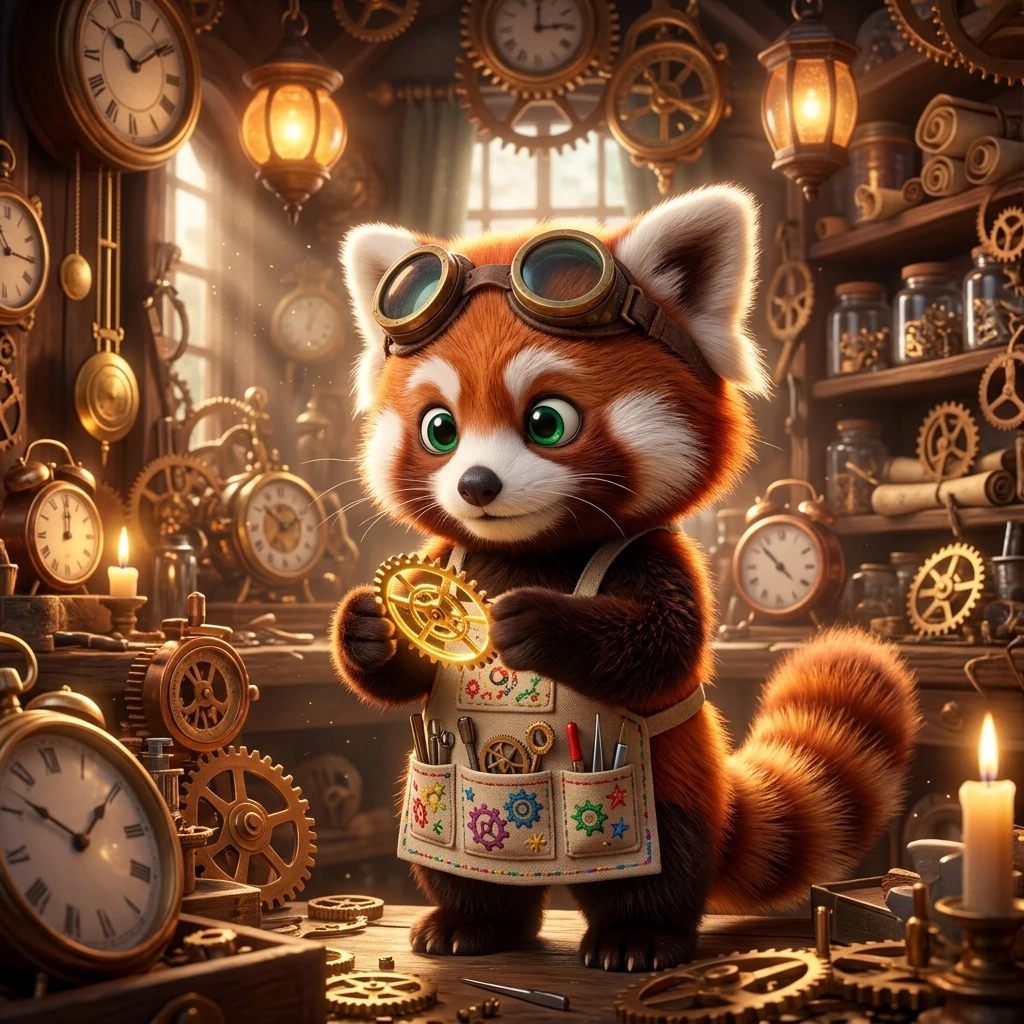
Nano Banana 2.1: Luminous ambient glow, velvety fur depth, and warm cinematic atmosphere.
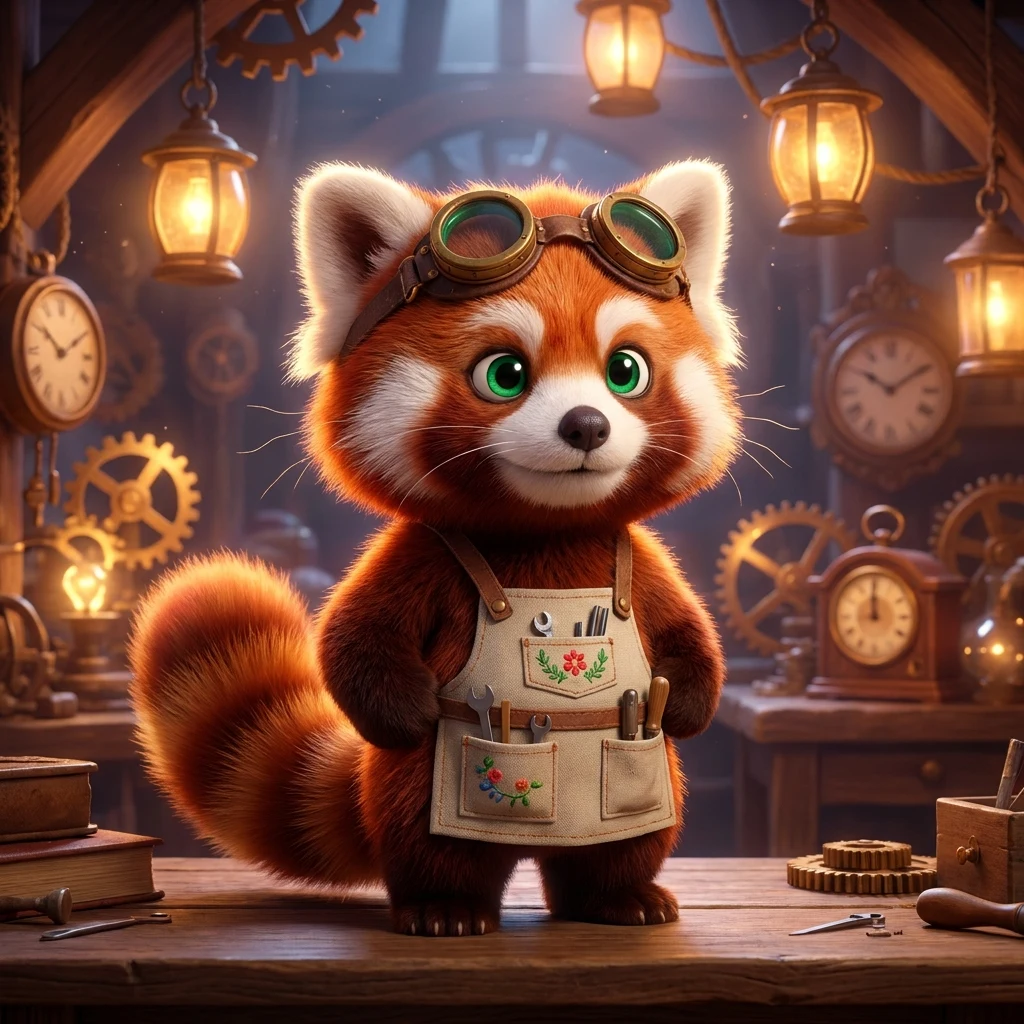
Nano Banana Pro: Crisp mechanical gears, precise apron stitching, and rigid geometric clarity.
Analysis:
- Nano Banana 2.1: Demonstrates convincing lighting physics. The amber lantern bounce light wraps around the red panda's cheeks and ears naturally, creating the gentle warmth characteristic of modern Disney and Pixar feature films.
- Nano Banana Pro: Exhibits higher edge sharpness and micro-detail on background clockwork gears. However, the overall mood is slightly more sterile compared to 2.1's painterly illumination.
- Verdict: Nano Banana 2.1 wins on charm and lighting mood, while Pro wins on mechanical background definition.
Scenario 2: 2D Japanese Anime Cel-Shaded Art
Prompt:
Japanese anime cel-shaded key visual illustration of a stylish cyberpunk teenage girl with lavender twin tails wearing an oversized pastel jacket, sitting on a vending machine rooftop in Neo-Tokyo at twilight, neon holographic billboards in background, clean crisp line art, vibrant anime color palette, Makoto Shinkai aesthetic lighting
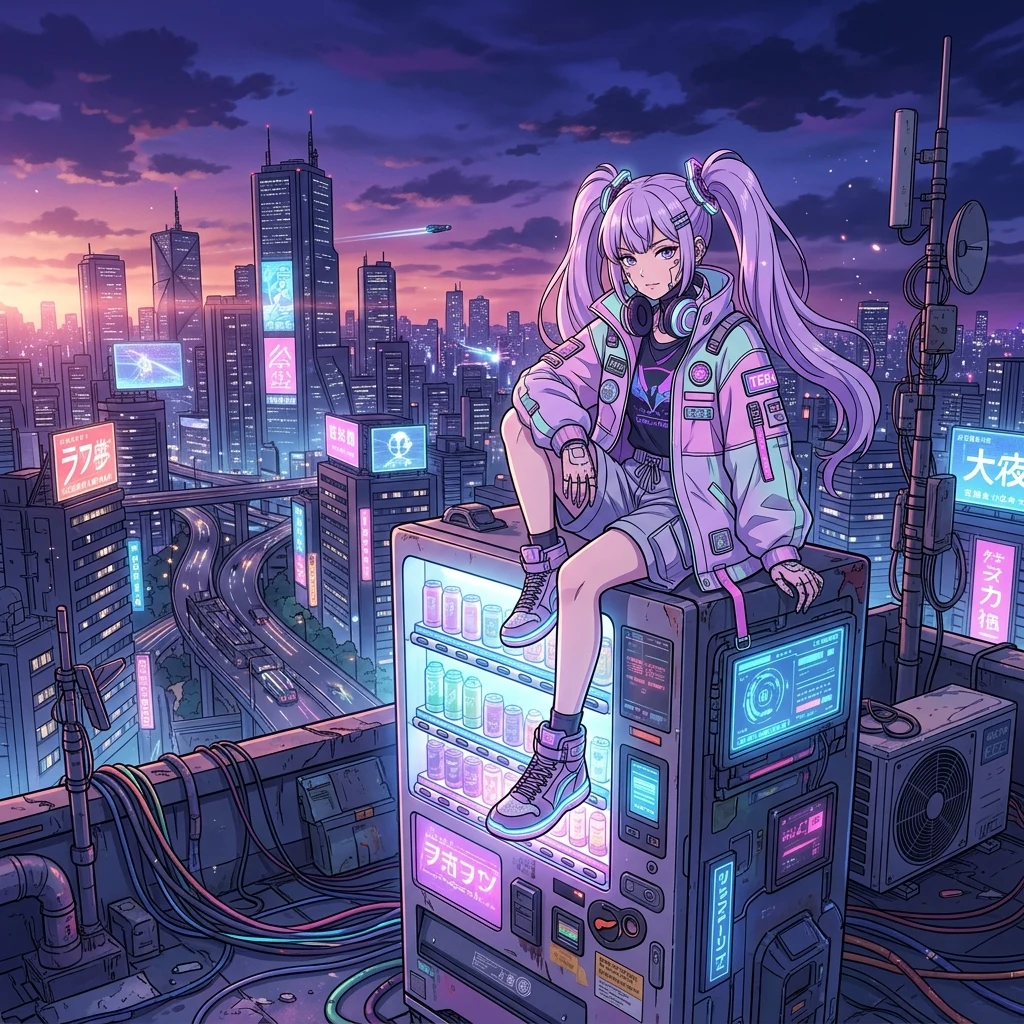
Nano Banana 2.1: Fluid line art, vivid neon gradient blending, and emotive anime expression.
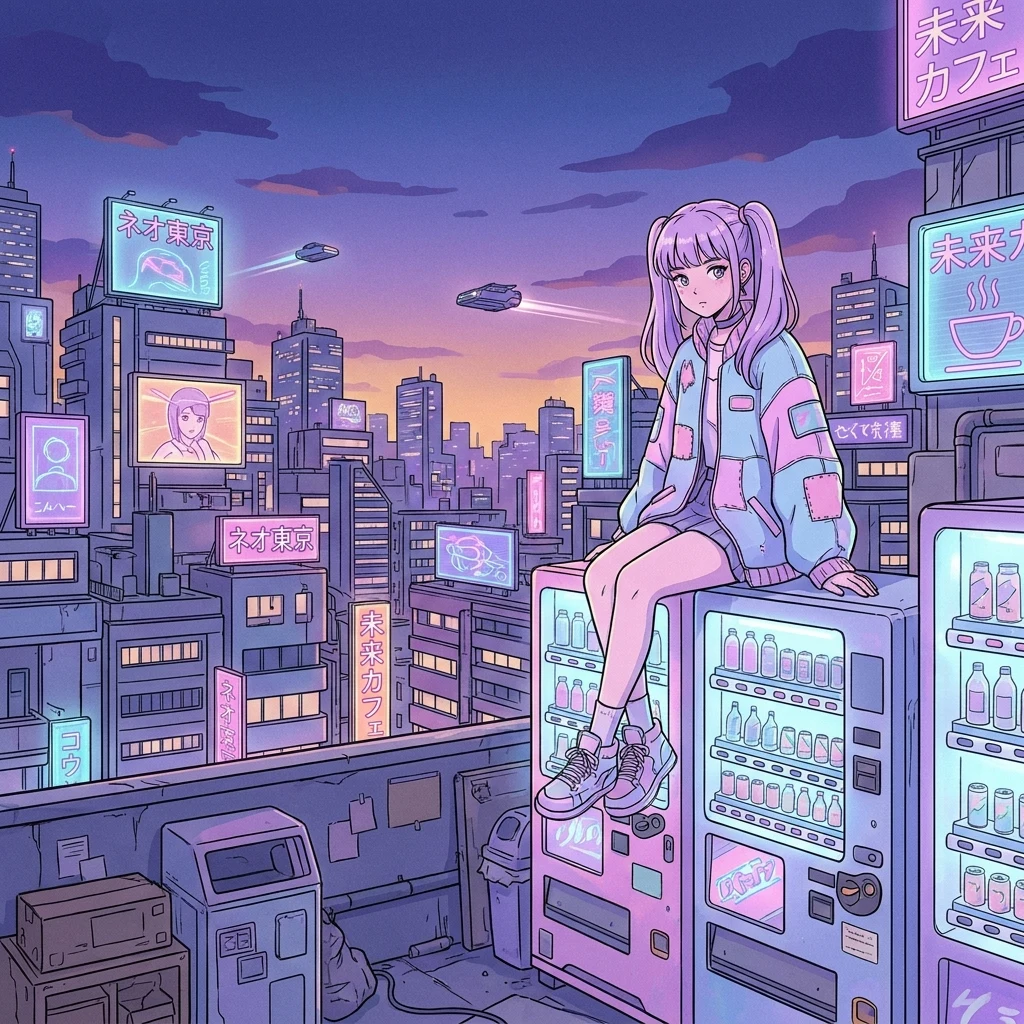
Nano Banana Pro: Defined architectural perspective, sharp clothing folds, and meticulous background signage.
Analysis:
- Nano Banana 2.1: Delivers vibrant, saturated neon palettes that capture the Makoto Shinkai twilight radiance. The character's face feels organic to high-end anime theatrical releases.
- Nano Banana Pro: Renders tighter structural linework on the rooftop architecture and vending machine panels. Color balance is slightly cooler and more restrained.
- Verdict: Tie. Creators seeking warm emotional storytelling will prefer 2.1, while creators requiring architectural precision will favor Pro.
Scenario 3: Vintage Comic Book Cover and Typography Rendering
Prompt:
Retro comic book cover layout, bold header typography clearly spelling "COSMIC CAT", an intrepid white cat astronaut floating in starry deep space holding a retro golden raygun, dynamic halftone dot shading, vintage 1970s comic style, clean and perfectly spelled title typography across top header
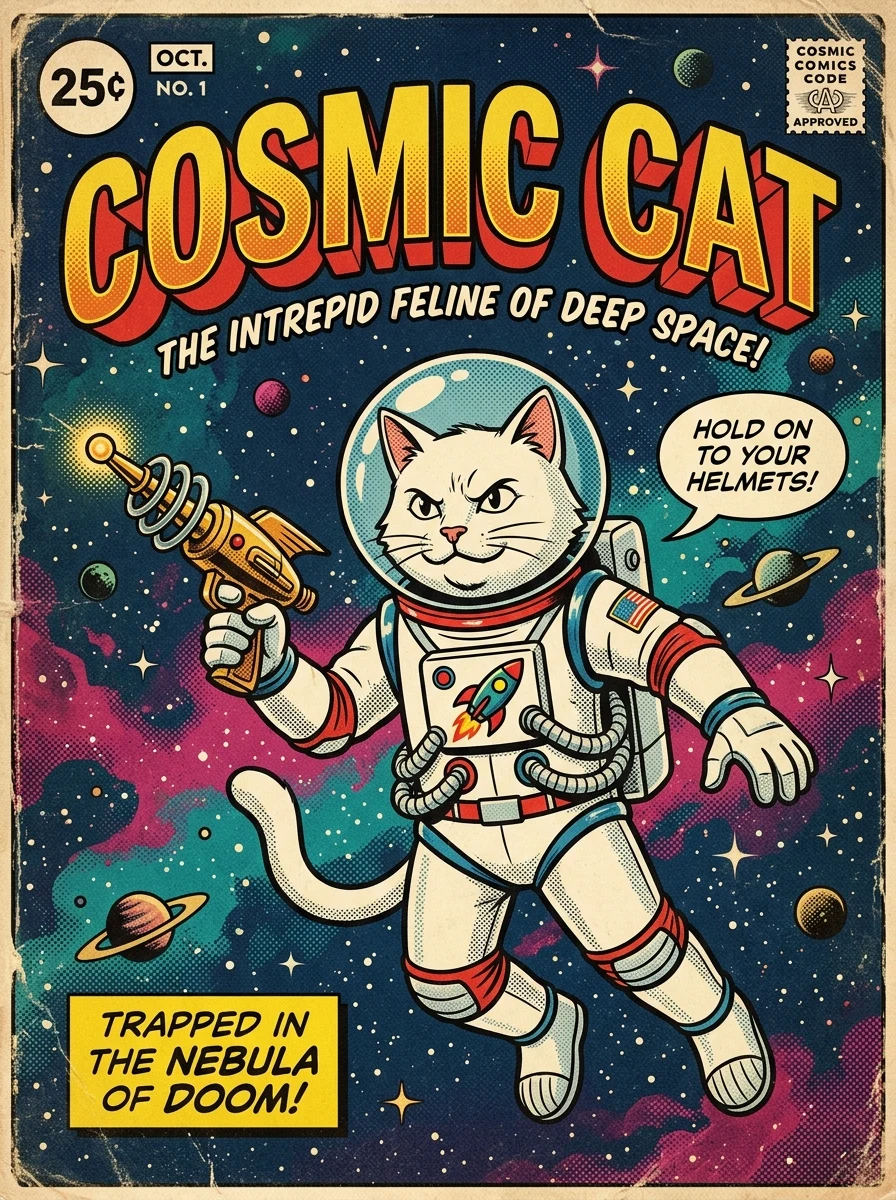
Nano Banana 2.1: Legible title header with dynamic retro pulp action and authentic halftone print texture.
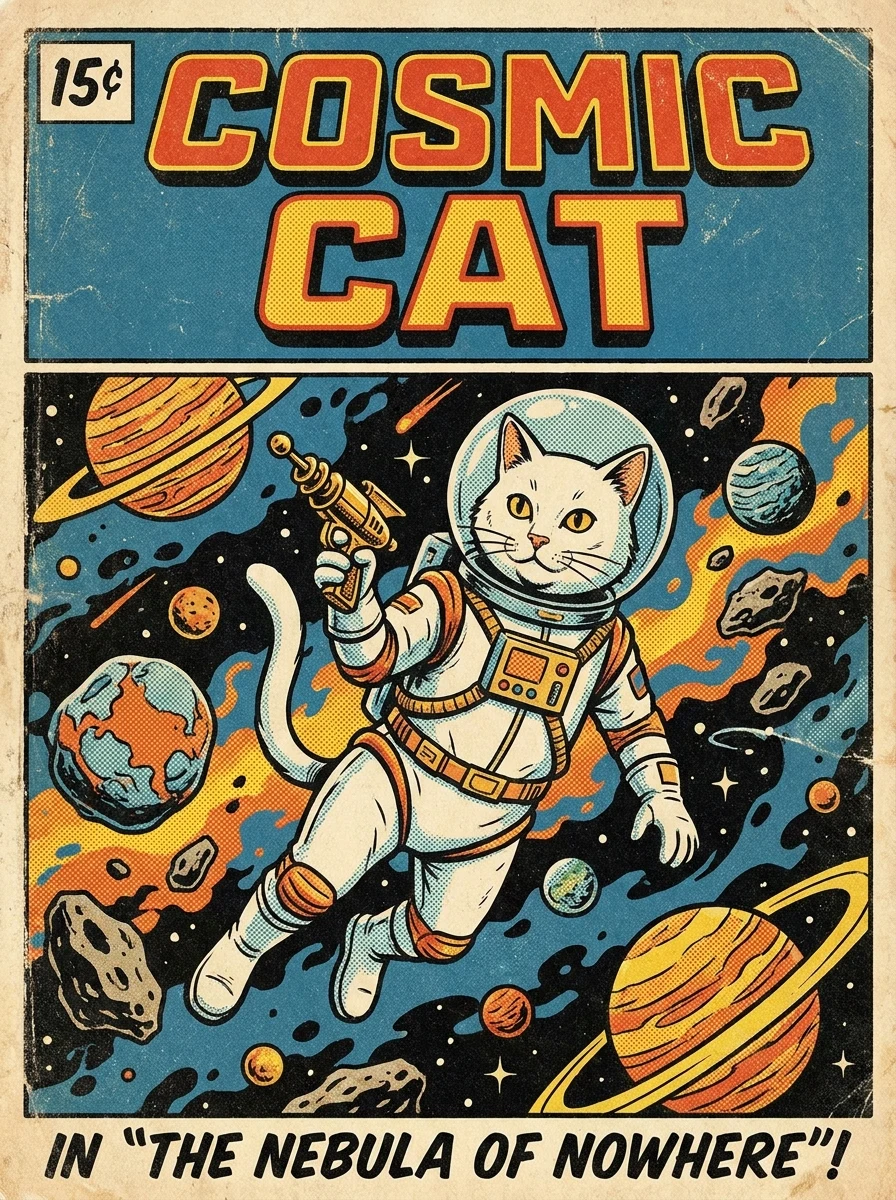
Nano Banana Pro: Impeccable kerning, razor-sharp letterform borders, and graphic design balance.
Analysis:
- In previous model iterations, rendering clean typography like
"COSMIC CAT"frequently produced garbled glyphs. - Both 2.1 and Pro successfully spelled the requested title.
- Nano Banana Pro: Excels noticeably in typographic kerning and letter spacing. The title integration sits with professional editorial poise, mimicking authentic vintage comic mastheads.
- Nano Banana 2.1: Rendered the text correctly, but the letters show slightly stylized irregularities on the outer strokes.
- Verdict: Nano Banana Pro wins for graphic design, cover art, and typographic layouts.
Scenario 4: Reference-Based Character Consistency (Image-to-Image)
We tested sequential character consistency by feeding our Scenario 1 Red Panda as an image reference (image_input), requesting a new setting, winter wardrobe, and steaming beverage while preserving the character's facial features and goggles.
Prompt:
The exact same 3D cartoon red panda apprentice from the reference image, now standing in a snowy blizzard mountain camp wearing a thick knitted teal scarf and fuzzy earmuffs, happily holding a wooden mug of hot steaming cocoa, identical face, identical goggles on forehead, identical red fur markings, warm campfire glow, Pixar animation style
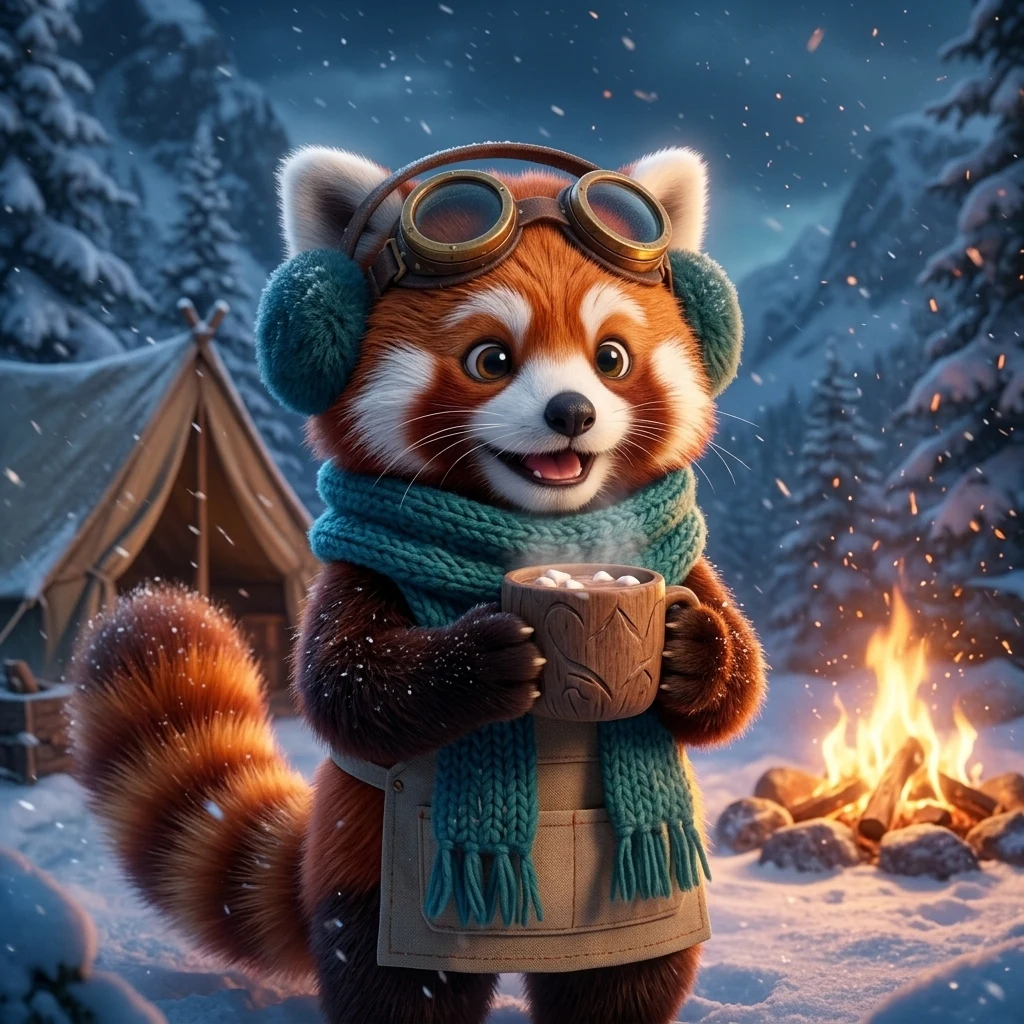
Nano Banana 2.1: Retains facial identity, eye coloration, and goggle style with atmospheric snow ambiance.
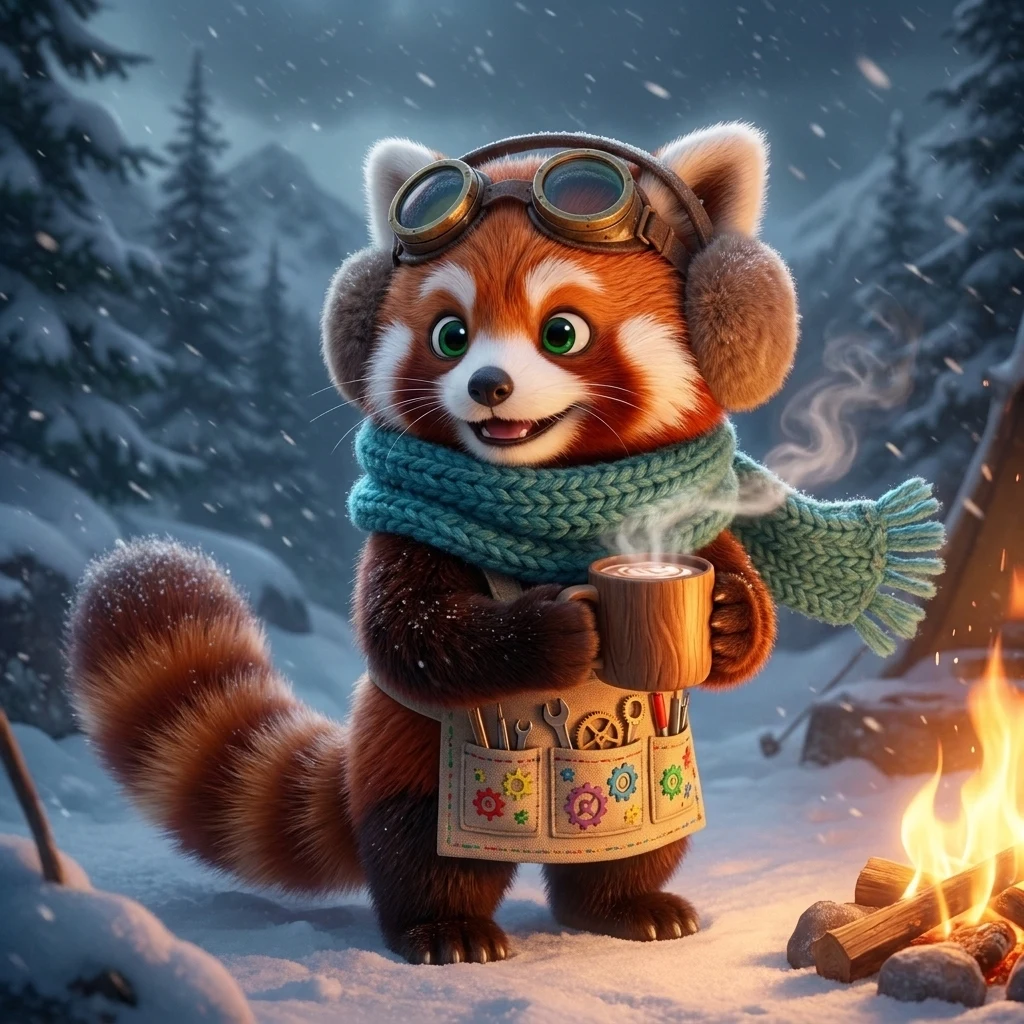
Nano Banana Pro: Strict anatomical preservation of facial markings, goggle strap placement, and mug texture.
Analysis:
- Both models preserved the character's core identity, proving that Google's reference fusion architecture handles multi-turn illustrated storytelling far better than legacy models.
- Nano Banana Pro adhered more strictly to the exact leather texture of the goggles and the bone structure of the muzzle.
- Nano Banana 2.1 adapted the winter environment with greater emotional warmth, producing steam and campfire rim lights that blend comfortably into the narrative.
- Verdict: Nano Banana Pro edges out on anatomical fidelity, while 2.1 provides 90% of the consistency at 25% of the cost.
The Optimal Hybrid Workflow for Cartoonists
Given the performance profiles, professional cartoonists and animators should avoid choosing between them exclusively. Instead, adopt this cost-effective two-stage production loop:
[Stage 1: Concept & Storyboarding]
  └─ Model: Nano Banana 2.1
  └─ Goals: Rapid brainstorming, color keys, scene pacing, and draft poses.
  └─ Benefit: 4x faster iteration, minimal credit usage.

[Stage 2: Key Art & Production Finishing]
  └─ Model: Nano Banana Pro (Selective)
  └─ Goals: Main book cover, title typography, licensing character sheets.
  └─ Benefit: Flawless lettering and zero character drift.
On AI Cartoon Generator, switching between models takes one click. When creating recurring cartoon characters with our AI Cartoon Character Generator or designing full graphic novels in the AI Storybook Maker, you can leverage Nano Banana 2.1 for all internal pages and reserve Nano Banana Pro for the illustrated front cover.
Frequently Asked Questions (FAQ)
Is Nano Banana 2.1 a downgrade from Nano Banana Pro?
No. Nano Banana 2.1 is built on the newer Gemini 3.6 Flash engine (released October 2026), whereas Pro was designed around Gemini 3 Pro. While Pro features larger reasoning weights, 2.1 benefits from newer multimodal tuning, yielding faster turnaround times, natural cinematic lighting, and superior token efficiency.
What happened to Nano Banana 2?
Google announced the retirement of the original Nano Banana 2 for late October 2026. Nano Banana 2.1 serves as the direct drop-in replacement with enhanced character consistency, improved prompt adherence, and full backward compatibility.
Does Nano Banana 2.1 support 4K output like Pro?
Yes. Both Nano Banana 2.1 and Nano Banana Pro support 1K, 2K, and 4K output resolutions. Drafting at 1K and upscaling keeper frames to 4K is supported across both models on our platform.
Can I mix both models in the same project?
Yes. Because both models utilize Google's shared reference token formatting, you can generate an initial character asset in Nano Banana 2.1, save it as a reference image, and feed it into Nano Banana Pro without format conversion issues.
Final Recommendation
If your primary focus is daily cartoon creation, anime webcomics, avatar generation, or children's book illustration, Nano Banana 2.1 is the new benchmark for price and performance. It matches Pro's visual appeal in most illustrative scenarios while cutting turnaround time and credit burn by 75%.
Reserve Nano Banana Pro for complex typographic layouts, commercial brand guidelines, and high-stakes hero banners.
Ready to see both models in action? Explore our pre-tuned Nano Banana 2.1 Generator or craft your own recurring cartoon cast today on AI Cartoon Generator.